2. 3. 2026
We optimise the operation of water infrastructure
Last year, we addressed a major technical issue for one of the leading water utility companies. During the closing of valves downstream of the pumps, water hammer effects occurred, resulting in damage to the valves. This phenomenon, caused by a sudden pressure increase in the pipeline, can also damage the pipeline itself or loosen and transport accumulated impurities.
The operator initially collected data directly on the discharge pipeline using data loggers. The measurements focused on pressure fluctuations in the pipeline during normal operation of the pumping station. Subsequently, we were provided with information on pipe diameters, flow rates, as well as the elevation and pressure conditions within the network.
The acquired input parameters were used to develop a hydrodynamic model of the network. Specialised DYNSIP software was employed for the analysis. Based on this model, we investigated suitable solutions to eliminate the occurrence of water hammer. Individual variants were incorporated into the model and their effectiveness was evaluated.
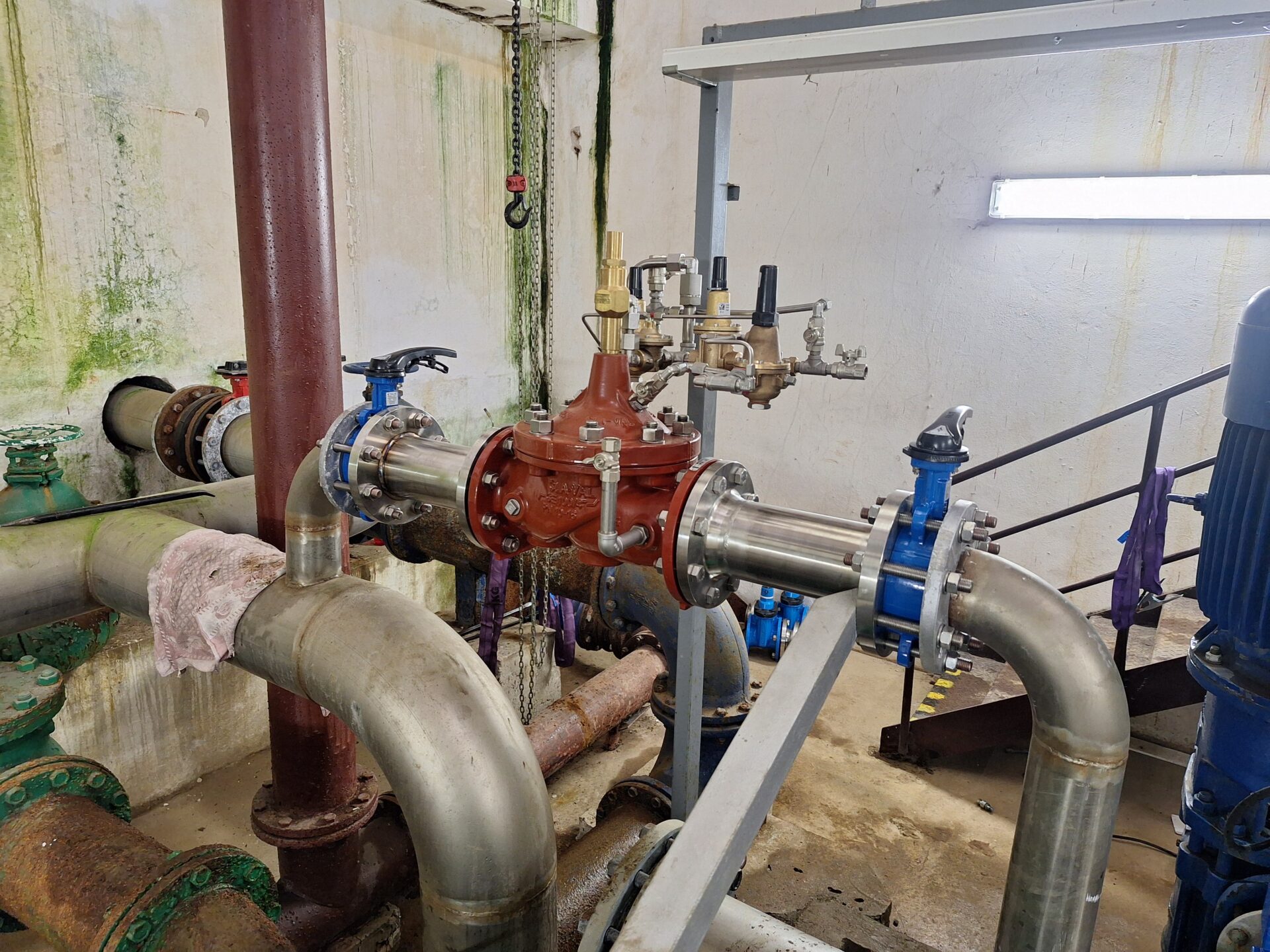
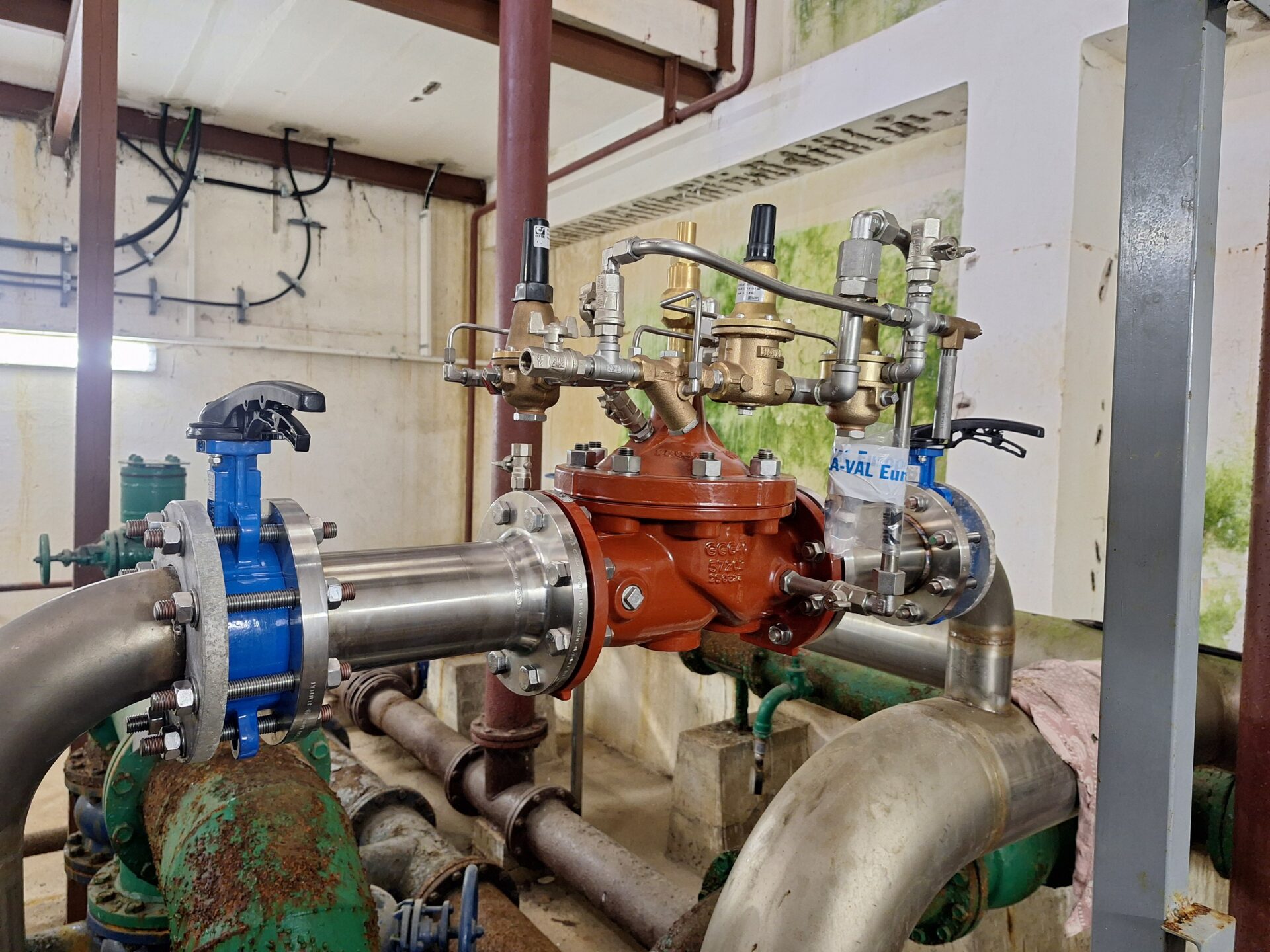
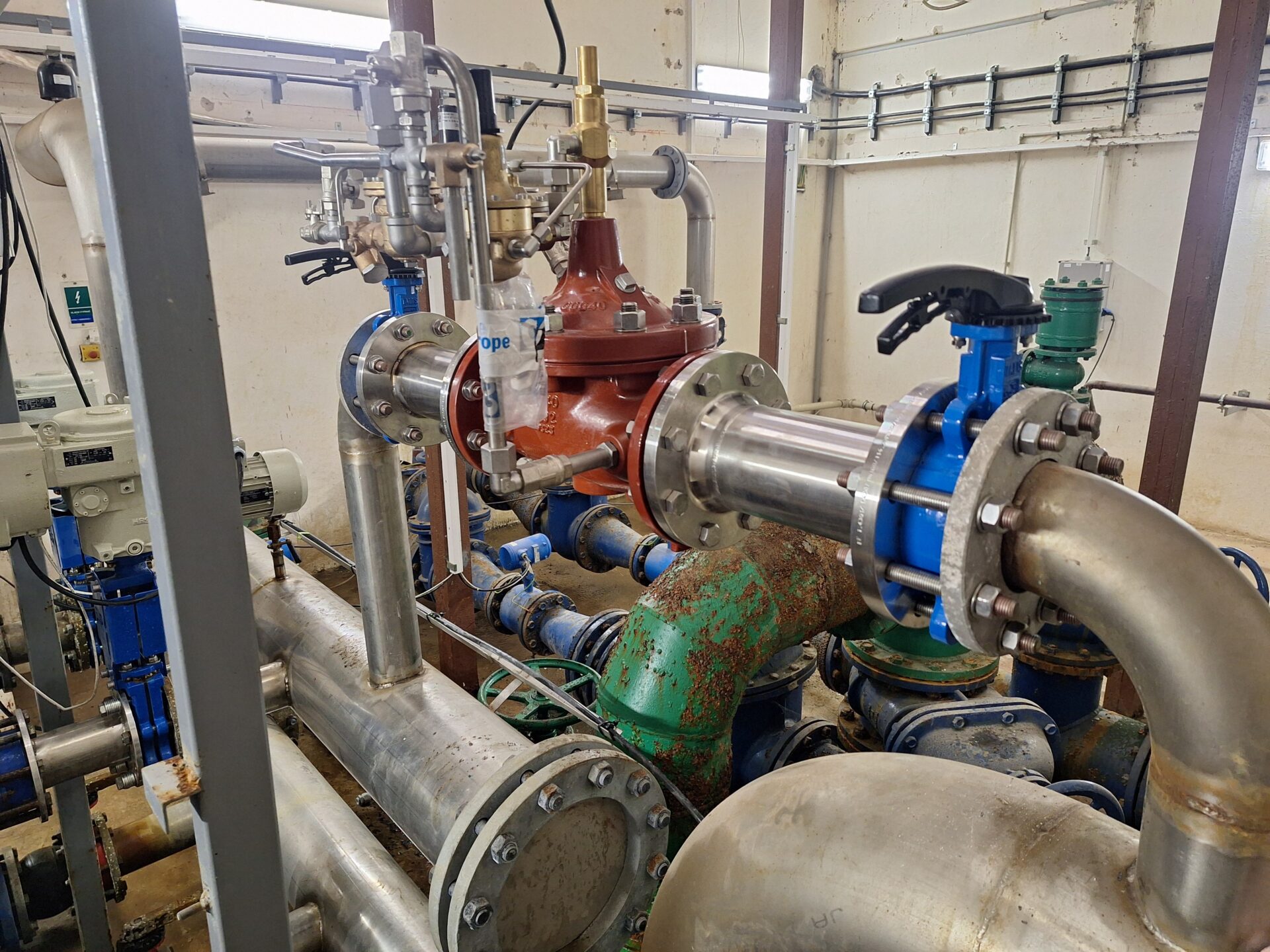
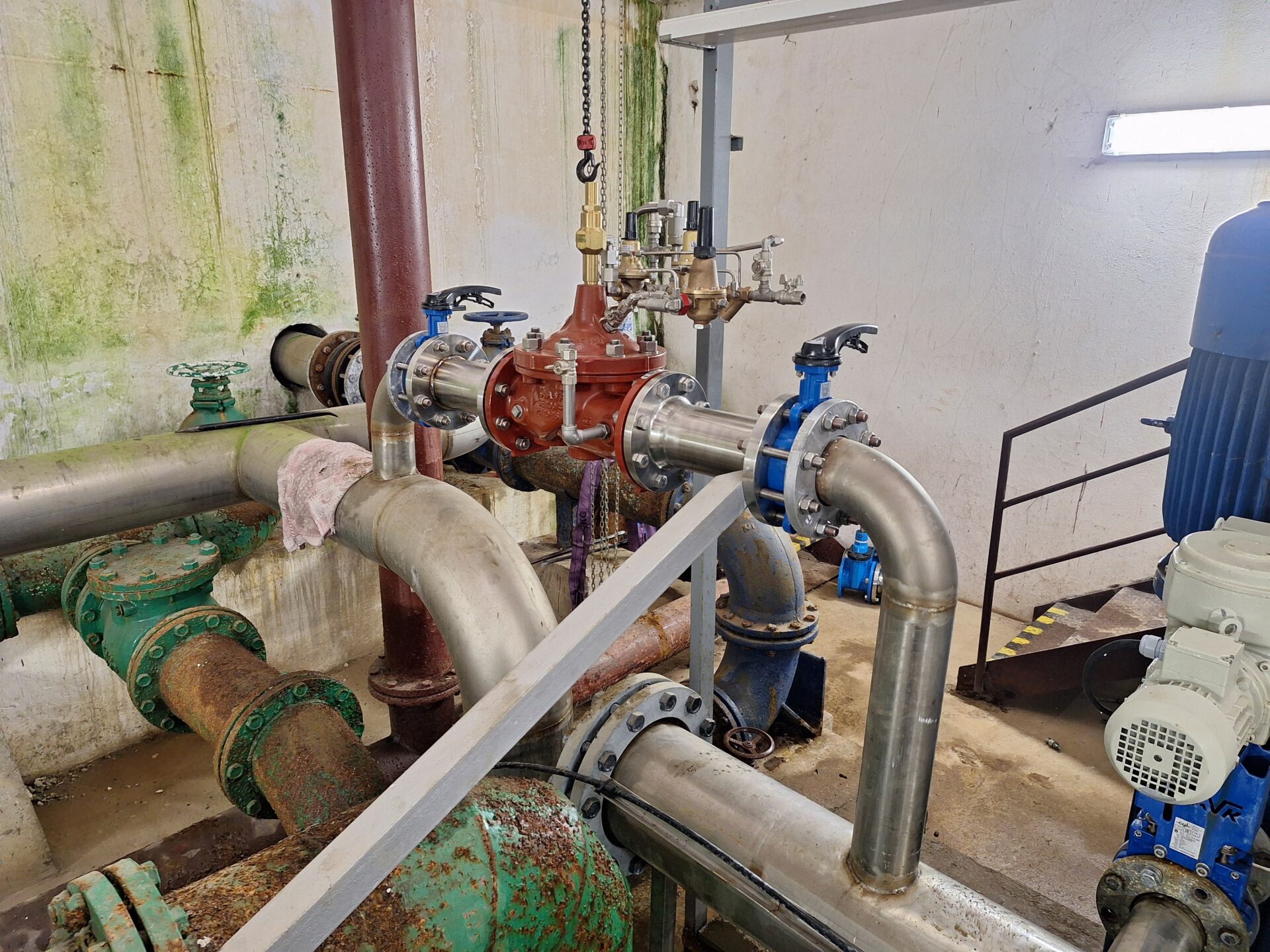
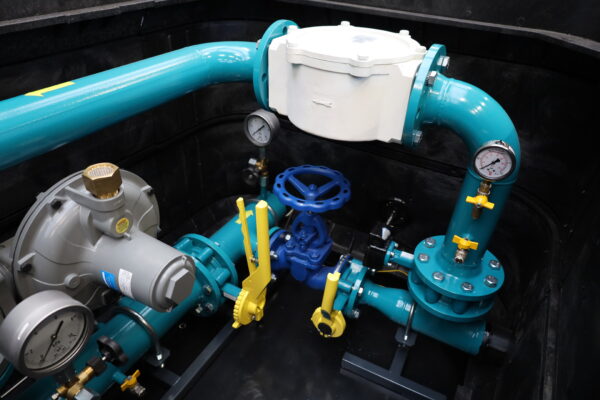
The outcome was a set of proposed measures presented to the customer. These included replacing the existing shut-off valves with a different type equipped with actuators providing a longer closing time. In addition, surge protection was implemented in the form of a CLA‑VAL pressure reducing valve installed on a bypass between the discharge pipeline and the storage tank (VDJ).
In autumn, we carried out the installation of the new valves as well as the pressure reducing valve. The works also included modifications to the stainless-steel piping. Due to the connection to existing pipelines, welding was performed directly inside the storage tank (VDJ) during a planned shutdown of the pumping station.